
Electric Car Loans :: News
SHARE

Share this news item!

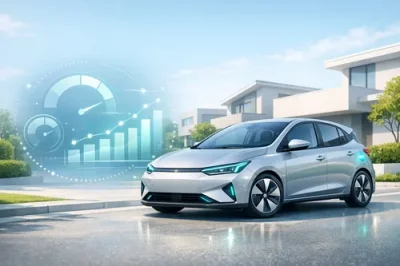
Chery Q Shapes Up as a New Budget EV Contender for Australia

A lower entry price could change how buyers compare compact electric cars and finance options

Chery Q Shapes Up as a New Budget EV Contender for Australia?w=400

The information on this website is general in nature and does not take into account your objectives, financial situation, or needs. Consider seeking personal advice from a licensed adviser before acting on any information.

Australia’s budget electric vehicle segment could be heading for another shake-up, with Chery’s compact Q model emerging as a potential rival to the current price leaders.
The small EV has gone on sale in Thailand at a sharply competitive price, giving Australian buyers an early clue about where Chery may position the car when it reaches our market.

The key point for shoppers is not just that another electric hatchback is coming. It is that the Chery Q appears designed to pressure the lower end of the EV market, where every few thousand dollars can materially affect deposit size, monthly repayments and overall borrowing comfort. BYD’s Atto 1 currently sits as Australia’s cheapest new electric vehicle from $23,990 before on-road costs, but Chery’s overseas pricing suggests the Q could sit close to that mark if local pricing follows the same logic.

There are important caveats. Thai prices do not translate cleanly into Australian drive-away prices, and local taxes, specification, shipping costs, exchange rates and dealer strategy can all shift the final number. Chery could also choose to compete against larger small-car EVs such as the BYD Dolphin, MG 4 Urban and GAC Aion UT rather than undercut the Atto 1 outright. Even so, the direction of travel is clear: affordable EV competition is intensifying.

For finance-minded buyers, this matters because lower purchase prices can open the door to smaller loan amounts or shorter loan terms. A compact EV priced in the low-to-mid $20,000 bracket could also make it easier for households to compare electric car loans against standard petrol-car finance, especially once fuel savings and lower servicing expectations are included in the ownership equation. However, buyers should avoid looking at sticker price alone. Battery size, real-world range, warranty coverage, charging speed and resale prospects all influence long-term value.

On paper, the Thai-market Chery Q uses a 42.7kWh battery, a 90kW rear motor and claimed driving range of up to 400km on the NEDC cycle, with DC charging capability up to 85kW. Those numbers would make it more than a bare-bones city runabout if mirrored locally, though Australian specifications are still to be confirmed. Before committing, buyers should model repayments across several price scenarios and allow for on-road costs, insurance, charging equipment and any optional extras.

The broader takeaway is encouraging: competition from Chery, Geely, BYD, MG and others is steadily making EV ownership more accessible. If the Chery Q lands at the right price, it could become another useful option for Australians who want to move into an electric car without stretching their budget too far.

Published:Sunday, 28th Jun 2026
Author: Paige Estritori

Please Note: We do not endorse any specific products or companies. Some content is sourced from third parties, including press releases, and may not be independently verified for accuracy or completeness.

Share this news item:

Rate this article

0 Comments

No comments yet. Be the first to share your thoughts.

Finance News

EVs and Hybrids Now Shape the Mainstream Car Finance Conversation
11 Nov 2026: Paige Estritori
Australia’s October new-car figures have delivered another clear signal for households comparing their next vehicle: electrified models are now central to the market, not a side category. Industry reporting based on VFACTS data, supplemented by Electric Vehicle Council figures for Tesla and Polestar, shows electric, plug-in hybrid and hybrid vehicles accounted for 51.2 per cent of new-vehicle deliveries in October 2026. - read more
EV Tax Changes Make the $75,000 Line More Important for Buyers
28 Oct 2026: Paige Estritori
Australia’s planned changes to the electric vehicle fringe benefits tax concession are turning the $75,000 mark into a practical checkpoint for many households comparing EV finance options. Fresh industry discussion has focused on whether the growing supply of lower-priced electric cars can help avoid a demand shock when the first stage of the transition begins on 1 April 2027. - read more
Renault Scenic E-Tech Gives Family EV Buyers Another Long-Range Option
16 Sep 2026: Paige Estritori
Renault’s Scenic E-Tech has joined Australia’s growing electric SUV field, giving family buyers another option in the increasingly busy middle of the EV market. With pricing starting from $55,990 before on-road costs, the Scenic E-Tech is not pitched as a bargain-basement electric car, but it does bring a long-range battery, family-friendly packaging and a well-known European badge into a price band many households are already considering. - read more
Volkswagen ID.4 Pure Gives Family EV Buyers a New Budget Checkpoint
19 Aug 2026: Paige Estritori
Volkswagen Australia’s latest ID.4 update gives electric SUV shoppers another important reference point as the market moves from early-adopter pricing towards more practical family budgets. The arrival of the more affordable ID.4 Pure variant places Volkswagen more directly into the finance conversation for buyers who may have liked the brand’s EV credentials, but previously found the numbers difficult to justify against Korean, Chinese and Tesla alternatives. - read more


Car Loan Articles

Electric Car Loan Eligibility in Australia: Documents, Credit Checks and Approval Steps
Understanding electric car loan eligibility can help Australian borrowers prepare a stronger, clearer application. This guide explains what lenders may assess, which documents are commonly requested, how credit checks work and what to expect during the approval process. - read more
Electric Vehicle Incentives and Tax Considerations in Australia
Electric vehicle incentives, tax settings and state-based concessions can affect the upfront and ongoing cost of buying an EV in Australia. This guide explains the main areas to check before deciding how much to finance, including FBT treatment, stamp duty, registration, rebates and business tax considerations. - read more
Electric Cars vs. Fossil Fuels: The True Cost of Ownership
In recent years, there's been a noticeable shift in the way Australians think about transportation. Electric cars are becoming a popular choice for many, driven by a combination of environmental consciousness and technological advancements. With more charging stations popping up across the country and a wider range of cars available, going electric seems like an attractive option. - read more
How Electric Car Loan Rates and Repayments Work in Australia
Electric car loan repayments depend on more than the advertised interest rate. This guide explains how rates, comparison rates, fees, loan terms, deposits, balloon payments and borrower circumstances can affect EV finance costs in Australia. - read more

Knowledgebase
Bridging Finance:
A short-term loan that covers a financial shortfall during time between the purchase of a new property and the sale of an old property.