
Electric Car Loans :: News
SHARE

Share this news item!

BYD Atto 1 Points to a Tougher Fight for Budget EV Buyers

A smaller electric hatch could make finance comparisons more important than ever

BYD Atto 1 Points to a Tougher Fight for Budget EV Buyers?w=400

The information on this website is general in nature and does not take into account your objectives, financial situation, or needs. Consider seeking personal advice from a licensed adviser before acting on any information.

Recent reports that BYD is preparing its smallest electric hatch for Australia add another layer to the fast-moving budget EV story.
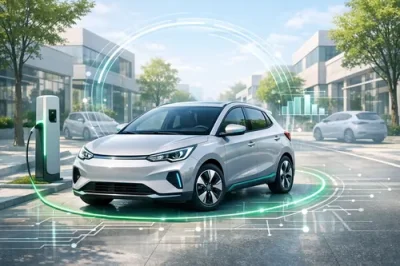
The model, widely known overseas as the Atto 1, is expected to sit beneath BYD’s existing Dolphin hatch if it reaches local showrooms, giving price-sensitive buyers another reason to revisit the numbers on going electric.

For Australian households, the importance of this development is less about badge rivalry and more about affordability. The lower end of the EV market has been gathering momentum as new Chinese brands, refreshed small cars and sharper dealer offers push more battery-electric options towards mainstream buyers. If BYD can position the Atto 1 below larger electric hatches, it may appeal to city drivers, second-car households and first-time EV buyers who have previously found the upfront cost too high.

That does not mean buyers should look only at the sticker price. A smaller EV can reduce the amount financed, but the final cost of ownership still depends on interest rate, loan term, deposit size, on-road costs, insurance, charging access and expected resale value. This is where it becomes important to compare electric car loans rather than assuming the cheapest vehicle automatically delivers the cheapest overall outcome.

Range will also be central to the Atto 1’s local appeal. Compact city EVs can be highly efficient and inexpensive to run, but they are usually designed around daily commuting rather than long-distance touring. Buyers should be realistic about weekly kilometres, access to home charging and how often they travel beyond metro areas. A lower purchase price can be attractive, but only if the vehicle genuinely suits the way it will be used.

The broader finance takeaway is that more low-cost EVs may give borrowers stronger choice, but also more variables to weigh up. A cheaper car may support a shorter loan term, a larger deposit relative to purchase price, or a smaller monthly commitment. Before committing, buyers should model repayments across different terms and rates to see how the numbers change.

If the Atto 1 arrives with aggressive pricing, it could place further pressure on rival entry-level EVs and encourage lenders to keep refining green car finance options. For buyers, that competition is welcome. The key is to treat the expanding model list as an opportunity to shop smarter, not faster.

Published:Tuesday, 4th Aug 2026
Author: Paige Estritori

Please Note: We do not endorse any specific products or companies. Some content is sourced from third parties, including press releases, and may not be independently verified for accuracy or completeness.

Share this news item:

Rate this article

1 Comment

J
Jaime Carter 5 Aug 2026

Cheaper sticker price is tempting, but I’d still want to run electric car loans against insurance and home charging costs first.

Finance News

EV Tax Changes Make the $75,000 Line More Important for Buyers
28 Oct 2026: Paige Estritori
Australia’s planned changes to the electric vehicle fringe benefits tax concession are turning the $75,000 mark into a practical checkpoint for many households comparing EV finance options. Fresh industry discussion has focused on whether the growing supply of lower-priced electric cars can help avoid a demand shock when the first stage of the transition begins on 1 April 2027. - read more
Renault Scenic E-Tech Gives Family EV Buyers Another Long-Range Option
16 Sep 2026: Paige Estritori
Renault’s Scenic E-Tech has joined Australia’s growing electric SUV field, giving family buyers another option in the increasingly busy middle of the EV market. With pricing starting from $55,990 before on-road costs, the Scenic E-Tech is not pitched as a bargain-basement electric car, but it does bring a long-range battery, family-friendly packaging and a well-known European badge into a price band many households are already considering. - read more
Volkswagen ID.4 Pure Gives Family EV Buyers a New Budget Checkpoint
19 Aug 2026: Paige Estritori
Volkswagen Australia’s latest ID.4 update gives electric SUV shoppers another important reference point as the market moves from early-adopter pricing towards more practical family budgets. The arrival of the more affordable ID.4 Pure variant places Volkswagen more directly into the finance conversation for buyers who may have liked the brand’s EV credentials, but previously found the numbers difficult to justify against Korean, Chinese and Tesla alternatives. - read more
BYD Atto 1 Points to a Tougher Fight for Budget EV Buyers
04 Aug 2026: Paige Estritori
Recent reports that BYD is preparing its smallest electric hatch for Australia add another layer to the fast-moving budget EV story. The model, widely known overseas as the Atto 1, is expected to sit beneath BYD’s existing Dolphin hatch if it reaches local showrooms, giving price-sensitive buyers another reason to revisit the numbers on going electric. - read more


Car Loan Articles

Electric Car Loan Eligibility in Australia: Documents, Credit Checks and Approval Steps
Understanding electric car loan eligibility can help Australian borrowers prepare a stronger, clearer application. This guide explains what lenders may assess, which documents are commonly requested, how credit checks work and what to expect during the approval process. - read more
Electric Cars vs. Fossil Fuels: The True Cost of Ownership
In recent years, there's been a noticeable shift in the way Australians think about transportation. Electric cars are becoming a popular choice for many, driven by a combination of environmental consciousness and technological advancements. With more charging stations popping up across the country and a wider range of cars available, going electric seems like an attractive option. - read more
How Electric Car Loan Rates and Repayments Work in Australia
Electric car loan repayments depend on more than the advertised interest rate. This guide explains how rates, comparison rates, fees, loan terms, deposits, balloon payments and borrower circumstances can affect EV finance costs in Australia. - read more
Electric Vehicle Incentives and Tax Considerations in Australia
Electric vehicle incentives, tax settings and state-based concessions can affect the upfront and ongoing cost of buying an EV in Australia. This guide explains the main areas to check before deciding how much to finance, including FBT treatment, stamp duty, registration, rebates and business tax considerations. - read more

Knowledgebase
Leverage:
The use of borrowed funds to increase the potential return of an investment, but which also increases potential risk.