
Electric Car Loans :: News
SHARE

Share this news item!

Leapmotor B05 Brings Sub-$40K EV Choice to Australian Buyers

A new rear-drive electric hatch could sharpen the finance equation for budget-conscious EV shoppers

Leapmotor B05 Brings Sub-$40K EV Choice to Australian Buyers?w=400

The information on this website is general in nature and does not take into account your objectives, financial situation, or needs. Consider seeking personal advice from a licensed adviser before acting on any information.

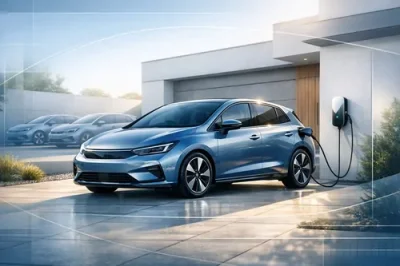
Australia’s affordable electric vehicle market is about to gain another serious contender, with Leapmotor confirming local pricing and specifications for the new B05 electric hatchback ahead of its late August showroom arrival.
For buyers who have been waiting for more choice below the $40,000 mark, the headline is simple: the B05 will start from $35,990 drive-away.

The range opens with the B05 Style, which uses a 56.2kWh lithium iron phosphate battery and offers a claimed WLTP driving range of up to 401km. The higher-grade Design LR is listed at $38,990 drive-away during its launch period, rising to $39,990 after 30 September 2026, and steps up to a 67.1kWh battery with a claimed WLTP range of 482km. Both versions use a rear-mounted electric motor producing 160kW and 240Nm, giving the B05 a performance profile that looks more engaging than many city-focused budget EVs.

For electric car finance customers, this is a useful development because drive-away pricing makes the starting point easier to understand. A lower purchase price can reduce the amount financed, potentially lowering repayments or giving buyers more room to choose a longer-range variant, add charging equipment, or keep a buffer for insurance and running costs. Before committing, shoppers should still compare electric car loans across interest rates, fees, loan terms and early payout conditions.

The B05 also appears designed to reduce the sense of compromise that can come with cheaper EVs. Standard equipment on the entry model includes 19-inch alloy wheels, LED lighting, a large central touchscreen, wireless smartphone mirroring, satellite navigation, wireless phone charging, a 360-degree camera and a broad active safety suite. The Design LR adds comfort and premium features such as a panoramic glass roof, heated front seats, a heated steering wheel, power-adjustable front seats and a 12-speaker audio system.

Charging capability is another point worth noting. Both variants support 11kW AC charging, while DC fast charging allows a 30 to 80 per cent top-up in roughly 16 to 18 minutes under ideal conditions. That matters for buyers weighing up whether an EV can fit their weekly routine, particularly if they do not have guaranteed home charging every night.

This story also extends Leapmotor’s broader value push in Australia following recent activity around its C10 electric SUV. The B05 gives the brand a smaller, cheaper entry point and places pressure on rivals such as the MG4 and BYD Dolphin. For households considering a first EV, the smartest next step is to model the total cost of ownership, including repayments, charging, insurance and servicing, using an electric vehicle loan calculator before deciding which variant best fits the budget.

Published:Sunday, 5th Jul 2026
Author: Paige Estritori

Please Note: We do not endorse any specific products or companies. Some content is sourced from third parties, including press releases, and may not be independently verified for accuracy or completeness.

Share this news item:

Rate this article

1 Comment

H
Hailey Thompson 5 Jul 2026

That 482km WLTP range on the Design LR is the bit that’d make me look twice, but I’d be keen to see how close it gets in normal suburban driving with air con on. The drive-away pricing helps, though the repayments and insurance would still decide it for me.

Finance News

Five Million EV Goal Puts Affordability Back in the Spotlight
18 Nov 2026: Paige Estritori
Australia’s electric vehicle market is no longer a niche story, but the latest industry assessment shows how much further the transition still has to run. The Electric Vehicle Council’s State of EVs 2026 work points to a need for more than five million battery electric vehicles on Australian roads by 2035 if transport is to contribute meaningfully to national emissions targets. - read more
EVs and Hybrids Now Shape the Mainstream Car Finance Conversation
11 Nov 2026: Paige Estritori
Australia’s October new-car figures have delivered another clear signal for households comparing their next vehicle: electrified models are now central to the market, not a side category. Industry reporting based on VFACTS data, supplemented by Electric Vehicle Council figures for Tesla and Polestar, shows electric, plug-in hybrid and hybrid vehicles accounted for 51.2 per cent of new-vehicle deliveries in October 2026. - read more
EV Tax Changes Make the $75,000 Line More Important for Buyers
28 Oct 2026: Paige Estritori
Australia’s planned changes to the electric vehicle fringe benefits tax concession are turning the $75,000 mark into a practical checkpoint for many households comparing EV finance options. Fresh industry discussion has focused on whether the growing supply of lower-priced electric cars can help avoid a demand shock when the first stage of the transition begins on 1 April 2027. - read more
Renault Scenic E-Tech Gives Family EV Buyers Another Long-Range Option
16 Sep 2026: Paige Estritori
Renault’s Scenic E-Tech has joined Australia’s growing electric SUV field, giving family buyers another option in the increasingly busy middle of the EV market. With pricing starting from $55,990 before on-road costs, the Scenic E-Tech is not pitched as a bargain-basement electric car, but it does bring a long-range battery, family-friendly packaging and a well-known European badge into a price band many households are already considering. - read more


Car Loan Articles

Electric Vehicle Incentives and Tax Considerations in Australia
Electric vehicle incentives, tax settings and state-based concessions can affect the upfront and ongoing cost of buying an EV in Australia. This guide explains the main areas to check before deciding how much to finance, including FBT treatment, stamp duty, registration, rebates and business tax considerations. - read more
Financing a New or Used Electric Car in Australia
New and used electric cars can both be financed in Australia, but they may be assessed differently. Borrowers should consider price, battery condition, warranty, depreciation, lender vehicle-age criteria and valuation risk before choosing an EV loan. - read more
How Electric Car Loan Rates and Repayments Work in Australia
Electric car loan repayments depend on more than the advertised interest rate. This guide explains how rates, comparison rates, fees, loan terms, deposits, balloon payments and borrower circumstances can affect EV finance costs in Australia. - read more
Electric Cars vs. Fossil Fuels: The True Cost of Ownership
In recent years, there's been a noticeable shift in the way Australians think about transportation. Electric cars are becoming a popular choice for many, driven by a combination of environmental consciousness and technological advancements. With more charging stations popping up across the country and a wider range of cars available, going electric seems like an attractive option. - read more

Knowledgebase
Certificate of Deposit (CD):
A savings certificate with a fixed maturity date and specified interest rate, typically higher than a standard savings account.