
Electric Car Loans :: News
SHARE

Share this news item!

Five Million EV Goal Puts Affordability Back in the Spotlight

Australia’s EV growth is accelerating, but the next phase depends on cost, charging and clear policy signals

Five Million EV Goal Puts Affordability Back in the Spotlight?w=400

The information on this website is general in nature and does not take into account your objectives, financial situation, or needs. Consider seeking personal advice from a licensed adviser before acting on any information.

Australia’s electric vehicle market is no longer a niche story, but the latest industry assessment shows how much further the transition still has to run.
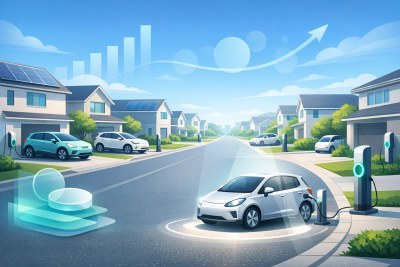
The Electric Vehicle Council’s State of EVs 2026 work points to a need for more than five million battery electric vehicles on Australian roads by 2035 if transport is to contribute meaningfully to national emissions targets.
For households looking at electric car finance, that turns the conversation from early-adopter enthusiasm to a more practical question: how quickly can EVs become affordable, convenient and financeable for mainstream buyers?

The scale is important. Australia has passed the half-million battery electric vehicle milestone, while battery electric and plug-in hybrid models together represented only a small share of the total national car fleet at the end of June. That means strong monthly sales figures are welcome, but they do not automatically replace the large stock of petrol and diesel vehicles already on the road.

For buyers, the finance angle is straightforward but not simple. More model choice and sharper entry prices can reduce the amount that needs to be borrowed, particularly as smaller EVs and value-focused SUVs arrive. However, a lower sticker price is only one part of the calculation. Loan term, interest rate, deposit, fees, balloon payments and expected ownership period can all change the real cost of moving into an EV. General tools such as a Car Loan Repayment Calculator can help illustrate repayment scenarios, but they are estimates rather than quotes or approvals.

Policy settings also matter. The council is calling for the next phase of the New Vehicle Efficiency Standard to be settled for the period beyond 2029, arguing that clearer rules would help manufacturers plan what vehicles to bring to Australia. From a consumer perspective, stronger supply can support competition, but policy changes can also affect timing decisions, resale expectations and which models remain attractive after incentives or tax settings shift.

Charging access is the other practical constraint. Households with off-street parking may find EV ownership easier to plan, while apartment residents, renters and regional drivers can face more uncertainty. Public chargers, workplace charging and charging-ready buildings are therefore not just infrastructure issues; they influence confidence, running-cost assumptions and whether an EV suits everyday use.

The useful takeaway is not that every buyer should rush into an EV. It is that the market is moving from novelty to scale. Anyone comparing electric car finance options may need to consider the vehicle price, total borrowing cost, charging access and current Electric Vehicle Incentives and Tax Considerations in Australia together, rather than treating the purchase price as the whole story.

Published:Wednesday, 18th Nov 2026
Author: Paige Estritori

Please Note: We do not endorse any specific products or companies. Some content is sourced from third parties, including press releases, and may not be independently verified for accuracy or completeness.

Share this news item:

Rate this article

0 Comments

No comments yet. Be the first to share your thoughts.

Finance News

Five Million EV Goal Puts Affordability Back in the Spotlight
18 Nov 2026: Paige Estritori
Australia’s electric vehicle market is no longer a niche story, but the latest industry assessment shows how much further the transition still has to run. The Electric Vehicle Council’s State of EVs 2026 work points to a need for more than five million battery electric vehicles on Australian roads by 2035 if transport is to contribute meaningfully to national emissions targets. - read more
EVs and Hybrids Now Shape the Mainstream Car Finance Conversation
11 Nov 2026: Paige Estritori
Australia’s October new-car figures have delivered another clear signal for households comparing their next vehicle: electrified models are now central to the market, not a side category. Industry reporting based on VFACTS data, supplemented by Electric Vehicle Council figures for Tesla and Polestar, shows electric, plug-in hybrid and hybrid vehicles accounted for 51.2 per cent of new-vehicle deliveries in October 2026. - read more
EV Tax Changes Make the $75,000 Line More Important for Buyers
28 Oct 2026: Paige Estritori
Australia’s planned changes to the electric vehicle fringe benefits tax concession are turning the $75,000 mark into a practical checkpoint for many households comparing EV finance options. Fresh industry discussion has focused on whether the growing supply of lower-priced electric cars can help avoid a demand shock when the first stage of the transition begins on 1 April 2027. - read more
Renault Scenic E-Tech Gives Family EV Buyers Another Long-Range Option
16 Sep 2026: Paige Estritori
Renault’s Scenic E-Tech has joined Australia’s growing electric SUV field, giving family buyers another option in the increasingly busy middle of the EV market. With pricing starting from $55,990 before on-road costs, the Scenic E-Tech is not pitched as a bargain-basement electric car, but it does bring a long-range battery, family-friendly packaging and a well-known European badge into a price band many households are already considering. - read more


Car Loan Articles

Electric Vehicle Incentives and Tax Considerations in Australia
Electric vehicle incentives, tax settings and state-based concessions can affect the upfront and ongoing cost of buying an EV in Australia. This guide explains the main areas to check before deciding how much to finance, including FBT treatment, stamp duty, registration, rebates and business tax considerations. - read more
Electric Cars vs. Fossil Fuels: The True Cost of Ownership
In recent years, there's been a noticeable shift in the way Australians think about transportation. Electric cars are becoming a popular choice for many, driven by a combination of environmental consciousness and technological advancements. With more charging stations popping up across the country and a wider range of cars available, going electric seems like an attractive option. - read more
Electric Car Loan Eligibility in Australia: Documents, Credit Checks and Approval Steps
Understanding electric car loan eligibility can help Australian borrowers prepare a stronger, clearer application. This guide explains what lenders may assess, which documents are commonly requested, how credit checks work and what to expect during the approval process. - read more
How Electric Car Loan Rates and Repayments Work in Australia
Electric car loan repayments depend on more than the advertised interest rate. This guide explains how rates, comparison rates, fees, loan terms, deposits, balloon payments and borrower circumstances can affect EV finance costs in Australia. - read more

Knowledgebase
Negative Amortization:
A situation in which the loan payment for any period is less than the interest charged over that period, causing the loan balance to increase.